
Friendship Challenges for Children with Learning Differences
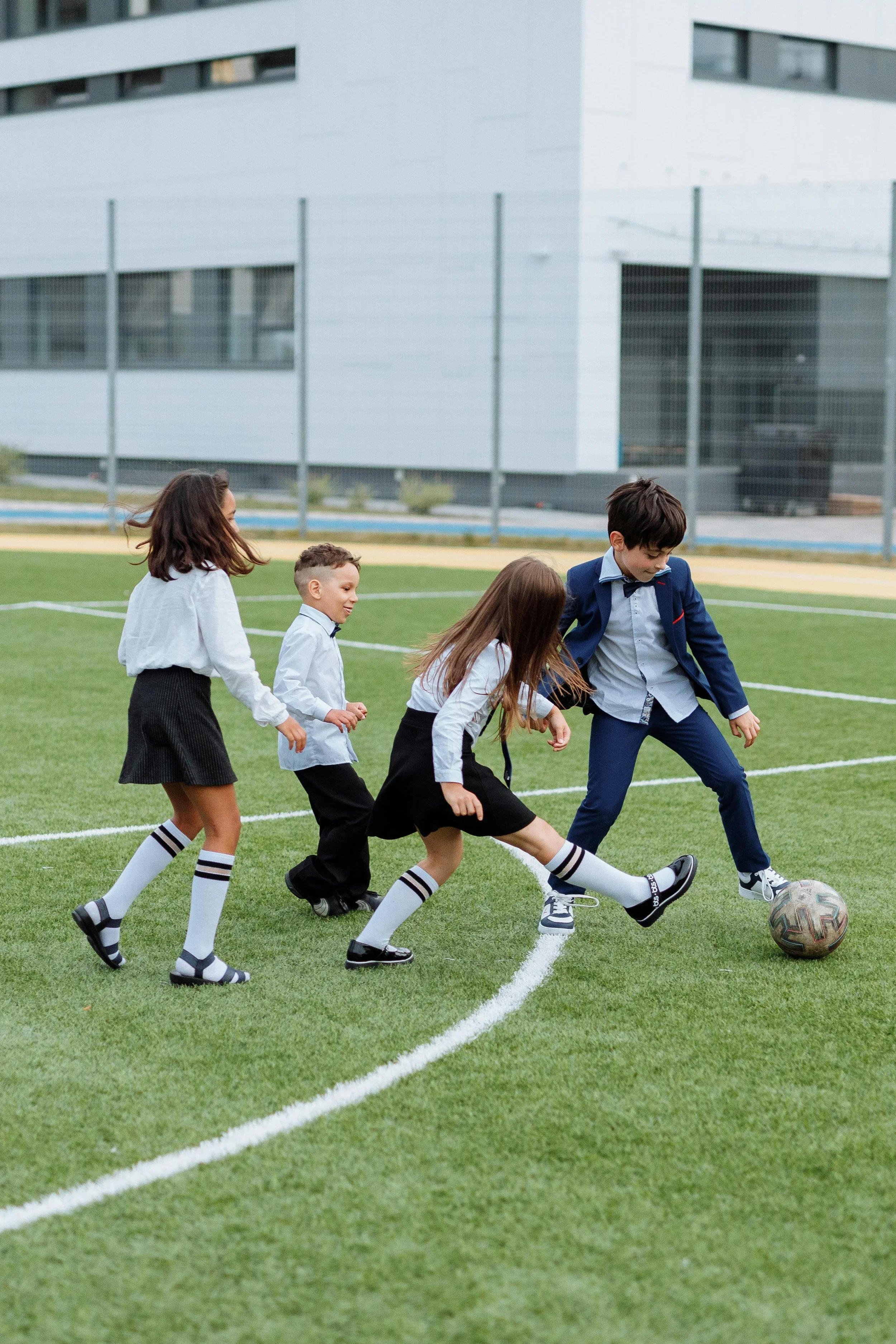
Your child comes home from school for the third day in a row, saying no one played with them at recess. Or maybe they had a great playdate on Saturday, but by Monday, that potential friend isn't speaking to them anymore. Watching your child struggle socially while their siblings or peers seem to make friendships effortlessly can be heartbreaking.
For many neurodivergent children, those with ADHD, autism, dyslexia, or other learning differences, social connection doesn't come as naturally as it seems to neurotypical peers. But here's what's important to understand: these challenges aren't about your child being "broken" or needing to become someone they're not. They're about helping your child build authentic connections in ways that honor who they are while developing skills that make social navigation easier.
Understanding the Social Landscape for Neurodivergent Children
First, let's discard the myth that neurodivergent children don't want friends or aren't interested in social connections. Research and the lived experiences of neurodivergent individuals tell us clearly that this simply isn't true. Most neurodivergent children deeply want friendships; they may just approach social interaction differently than their neurotypical peers expect.
The challenge often lies in the mismatch between neurodivergent social communication styles and the unwritten social rules that neurotypical children seem to absorb without explicit teaching. These unwritten rules about turn-taking in conversation, reading nonverbal cues, matching energy levels to social contexts, and navigating the complex social hierarchies of childhood can feel like trying to learn a foreign language without a dictionary.
For children with ADHD, impulsivity might lead to interrupting or difficulty waiting their turn, which peers can misinterpret as rudeness. Children on the autism spectrum might struggle to read facial expressions or understand sarcasm, leading to confusion in social situations. Kids with language-based learning differences might have trouble keeping up with rapid conversational exchanges or finding the right words when they need them.
None of these differences means your child can't have fulfilling friendships. They just mean that social connection might require more explicit teaching, practice, and support than it does for neurotypical children. Understanding your child's specific profile through psychoeducational evaluation can help identify where they need the most support.
Common Friendship Challenges and Why They Happen
Let's explore some of the specific social challenges neurodivergent children often face, not to label or limit them, but to understand where targeted support can make the biggest difference.
Reading Social Cues
Many neurodivergent children struggle to interpret facial expressions, body language, and tone of voice, making it hard to know how others are feeling or whether their own behavior is landing well.
Managing Conversation Flow
Knowing when to talk, when to listen, how to stay on topic, and how to transition between subjects can be challenging, leading to one-sided conversations or awkward silences.
Handling Conflict
Disagreements are a normal part of friendship, but navigating conflict requires complex skills like perspective-taking, emotional regulation, and compromise that don't come naturally to many neurodivergent children.
Matching Energy and Intensity
Some neurodivergent children have different energy levels or emotional intensity than their peers, which can feel overwhelming to others or lead to being perceived as "too much."
Understanding Unwritten Rules
From personal space boundaries to what topics are "okay" to discuss in different contexts, neurotypical children seem to absorb social rules that neurodivergent children often need to be taught explicitly.
Regulating Emotions in Social Settings
When emotions run high during play or group activities, some neurodivergent children struggle to manage their feelings in ways that peers understand or accept.
The good news is that all of these skills can be taught, practiced, and improved. The key is teaching them explicitly rather than expecting your child to pick them up through observation alone.
The Importance of Neurodiversity-Affirming Support
Here's something crucial: supporting your child's social development doesn't mean teaching them to mask who they are or force themselves into a neurotypical mold. Masking, the practice of hiding neurodivergent traits to appear more neurotypical, can lead to exhaustion, anxiety, and loss of authentic self-expression.
Instead, neurodiversity-affirming support helps children understand their own social communication style, recognize how it differs from others', and develop skills that make interaction easier without requiring them to pretend to be someone they're not. It means helping them find environments and friendships where they can be authentic while also giving them tools to navigate a world that's often designed for neurotypical communication.
This approach recognizes that sometimes the "problem" isn't your child's behavior, it's environments that aren't inclusive or accepting of neurodivergent ways of being. At the same time, it acknowledges that giving children skills to navigate social situations more effectively increases their options and reduces their stress, even when we're also working toward more accepting environments.
Counseling services that are neurodiversity-affirming can support your child in building social skills while honoring their authentic self and protecting their mental health.
Building Blocks: Foundational Social Skills
While every child's needs are unique, certain foundational skills support social success across different contexts. Teaching these explicitly can make a significant difference.
The first is perspective-taking, understanding that other people have thoughts, feelings, and experiences different from their own. For many neurodivergent children, this doesn't develop automatically and needs to be taught through discussion, role-play, and reflection on social situations.
Emotional regulation is equally fundamental. Children need strategies for recognizing when they're becoming overwhelmed, upset, or overly excited, and tools for managing those feelings in social contexts. This might include taking breaks, using calming strategies, or asking for help before emotions escalate.
Communication skills like making eye contact (to a comfortable degree), using greetings and polite language, asking questions to show interest in others, and sharing information about themselves in balanced ways all support positive peer interaction. These can be practiced in low-stakes situations before being applied with peers.
Finally, conflict resolution skills, including apologizing genuinely when appropriate, compromising, and understanding that disagreements don't necessarily mean the end of a friendship, help children maintain friendships through the inevitable bumps that arise.
Creating Opportunities for Social Success
One of the most powerful things you can do as a parent is engineer social situations where your child is likely to experience success. This doesn't mean hovering or controlling every interaction; it means being thoughtful about setting your child up well.
Start with one-on-one playdates rather than large group situations. Many neurodivergent children do much better with individual friendships than in group dynamics, where social demands are more complex. Keep initial playdates short, perhaps an hour or ninety minutes, ending while things are still going well rather than waiting for everyone to get tired and cranky.
Choose activities that play to your child's strengths and interests. If your child loves building with Legos, invite a potential friend over for a Lego building session. Shared activities give children something to do together and conversation topics when interaction might otherwise lag. Structure also helps many neurodivergent children feel more comfortable.
Consider your child's sensory needs and energy levels when planning social activities. A child who gets overwhelmed by noise and crowds might do better with a visit to a quiet museum than a loud trampoline park. Respecting these needs isn't limiting your child; it's setting them up to show up as their best self.
For some children, finding other neurodivergent peers can be transformative. When children share similar ways of interacting, friendships often flow more naturally. Look for social groups, clubs, or activities that might attract other kids with similar interests or neurotypes.
When and How to Coach Social Situations
The question of how much to intervene in your child's social challenges is delicate. You don't want to hover or embarrass your child, but you also don't want to leave them struggling without support.
One effective approach is post-situation debriefing. After a playdate or social event, talk with your child about what went well and what was challenging. Use specific examples: "I noticed when Emma suggested playing a different game, you got upset. What was hard about that?" This helps children develop awareness of their own patterns.
Role-playing can be incredibly helpful for practicing social scenarios in a safe environment. "Let's practice what you could say when someone asks to play your favorite game" or "Show me how you could join a group that's already playing," gives children scripts and strategies they can draw on in real situations.
For younger children or those who benefit from more support, you might coach more actively during social situations, but do so subtly. A quiet reminder like "remember to ask Jake about his week" or "maybe it's time for a snack break" can redirect situations that are starting to go off track without being obvious to peers.
Some children benefit from working with professionals who specialize in social skills development. Executive function coaching often includes social executive skills like flexible thinking and self-monitoring that support friendship success.
Supporting Your Child Through Social Struggles
Perhaps the most important thing you can do is be a safe person for your child to share their social struggles with. Create space for them to talk about friendship challenges without judgment, fixing, or minimizing.
When your child shares that they ate lunch alone or that friends were mean to them, resist the urge to immediately problem-solve. Sometimes children just need to be heard and validated. "That sounds really hard. I'm so sorry that happened" can be more helpful than jumping straight to "here's what you should do."
At the same time, help your child build resilience by normalizing that all friendships have challenges and that social skills improve with practice. Share age-appropriate stories from your own childhood about friendship struggles and how you navigated them. This helps children understand that they're not uniquely flawed; they're learning skills that take time to develop.
Watch for signs that social struggles are significantly impacting your child's well-being. If they're becoming anxious about school, refusing to participate in activities they used to enjoy, or showing signs of depression, professional support may be needed. Parent coaching can help you develop strategies for supporting your child through these challenges.
The Role of Schools and Teachers
School is where much of children's social life happens, and partnering with teachers can significantly support your child's social development. Teachers see social dynamics that you never witness and can provide valuable perspective on how your child interacts with peers.
Let teachers know that social development is a priority for your child and your family. Ask them to watch for positive social interactions and opportunities to practice skills, not just problems. Request that they facilitate inclusion in group activities rather than allowing self-selection that might leave your child out.
If your child has an IEP or 504 plan, social skills goals can be included. This might involve structured social skills instruction, lunch bunch groups with peers, or check-ins with a counselor to process social situations. Understanding how to advocate for these supports through educational IEP consulting ensures your child gets the help they need.
Some schools offer social skills groups where children can practice with peers under adult guidance. These can be wonderful opportunities for explicit teaching and supported practice in a safe environment.
Looking Forward with Hope
Social challenges in childhood don't determine your child's social future. Many adults who struggled socially as neurodivergent children go on to have rich, fulfilling social lives. As children mature, develop skills, and increasingly find their "people," social life often becomes significantly easier.
Your child's neurodivergent traits, the very things that sometimes make social connection challenging, are also sources of strength. The intense focus that can make conversation difficult might fuel expertise in fascinating topics. The directness that peers sometimes misunderstand can become refreshing honesty in adult friendships. The different perspective that creates social confusion can lead to creativity and innovation.
The goal isn't to change who your child is, it's to help them navigate a neurotypical-centered world while building genuine connections that celebrate their authentic self. With patient support, explicit teaching, and environments that honor neurodiversity, your child can absolutely develop the friendships they deserve. They might just look a little different than you expected, and that's not just okay, it's beautiful.
Every learning difference is an opportunity to discover new strengths. We’re here to support your family in celebrating what makes your child uniquely amazing. Contact us today to learn more or get started!
