
Practical Exercises for Building Stronger Executive Functioning Skills
Your child knows what they need to do. They understand the assignment, they have the materials, and they genuinely want to complete their work. Yet somehow, two hours later, they've reorganized their pencil case, built a paperclip chain, and maybe written their name at the top of the page. The disconnect between knowing what to do and actually doing it isn't about motivation or intelligence. It's about executive function.
Executive function skills are the mental processes that help us plan, focus attention, remember instructions, and manage multiple tasks. They're the air traffic control system of the brain, coordinating everything from getting ready for school to completing long-term projects. When these skills are weak, daily life feels exponentially harder. But here's the good news: executive function skills can be developed through targeted practice, and that practice doesn't have to feel like work.
Understanding Executive Function Development
Before diving into specific exercises, it's helpful to understand that executive function develops slowly and unevenly. The prefrontal cortex, which governs these skills, doesn't fully mature until the mid-twenties. This means expecting perfect organization, planning, and self-regulation from children is neurologically unrealistic. They're literally working with developing equipment.
Children with ADHD often show executive function development that's three to five years behind their chronological age. A twelve-year-old might have the executive function skills of a seven or eight-year-old. Understanding this developmental lag helps set appropriate expectations and choose exercises that match current capacity rather than age-based assumptions.
Executive function coaching typically addresses several key areas: working memory, cognitive flexibility, inhibitory control, task initiation, planning and prioritization, organization, and time management. Strengthening any of these areas through practice creates ripple effects that improve functioning across contexts. The exercises that follow target these different skill areas in ways that feel engaging rather than remedial.
Working Memory Strengthening Activities
Working memory is the mental workspace where we hold and manipulate information. It's what allows you to remember the beginning of a sentence while you're reading the end, or to follow multi-step directions. Weak working memory makes it difficult to complete tasks without constant reminders or to keep track of what you're doing. These activities build working memory capacity:
Memory Games with Increasing Complexity
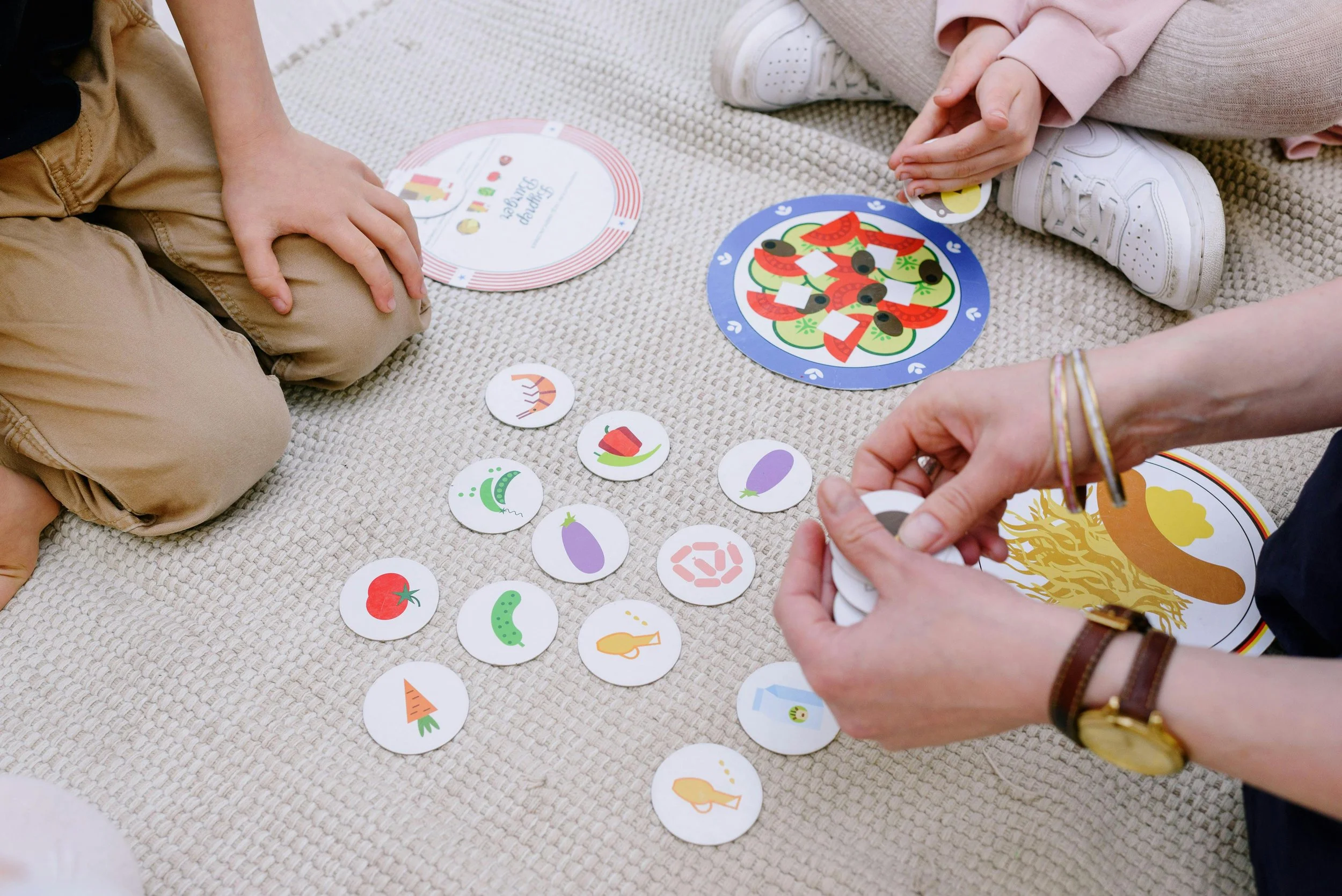
Start with simple card-matching games and gradually increase difficulty by adding more cards, introducing time limits, or requiring children to remember card positions plus an additional rule like "match only red cards first."
Cooking Together Following Verbal Recipes
Give your child verbal instructions for simple recipes one or two steps at a time, requiring them to hold the information in mind while they measure, mix, and complete each step before receiving the next instruction.
Story Chain Building
Take turns adding to a story where each person must repeat everything said before and add one new element, which requires holding increasingly long sequences in mind while processing and contributing new information.
Mental Math Practice
Present math problems verbally without paper and gradually increase complexity, which forces working memory to hold numbers and operations simultaneously rather than relying on written support.
Sequential Direction Following
Give your child multi-step directions like "go upstairs, get your blue folder from your desk, bring it to the kitchen, and put it in your backpack," increasing the number of steps as their capacity grows.
Working memory exercises work best when practiced in short bursts rather than extended sessions, as this skill tires quickly and practice beyond fifteen or twenty minutes often becomes counterproductive.
Task Initiation and Breaking Through Stuck Points
Task initiation is the ability to begin an activity without endless procrastination or external pressure. Children with weak task initiation know what to do but cannot seem to start. They're not being oppositional or lazy. Their brain struggles with the activation energy required to begin. These strategies help strengthen task initiation:
The "just five minutes" approach works because it reduces the overwhelming feeling of starting. Tell your child they only need to work for five minutes, then they can stop. Most often, once they've started, continuing feels easier than stopping. But even if they do stop after five minutes, they've practiced the skill of initiating, which is what needs strengthening.
Breaking tasks into tiny first steps removes the analysis paralysis that prevents starting. Instead of "do your homework," the first step might be "get your math folder." Once that's complete, the next step is "open to page 47." These absurdly small steps eliminate the cognitive load of figuring out where to start, which is often the real barrier.
Creating start-up routines also helps. If homework always begins with the same sequence (get snack, set up workspace, review assignment list), that routine becomes the task initiation cue. The brain doesn't have to generate starting energy from scratch because the routine carries momentum.
Building Planning and Prioritization Skills
Planning involves looking ahead, considering what's needed, and organizing steps in logical sequence. Prioritization means determining what's most important or urgent. Both skills require abstract thinking about future events, which children often find challenging. Here are exercises that build these capacities through concrete practice:
1. Backwards Planning for Events
Choose an upcoming event (birthday party, family trip, project due date) and work backwards from that date with your child to identify what needs to happen when, making the abstract concept of future planning concrete and visual.
2. Priority Sorting Games
Present scenarios with multiple tasks and have your child sort them by urgency or importance (such as homework due tomorrow, long-term project, optional reading) and discuss their reasoning to build critical thinking about prioritization.
3. Weekly Planning Sessions
Sit together on Sunday and look at the week ahead, identifying busy days, commitments, and time for homework or activities, which builds the habit of proactive planning rather than reactive responding.
4. Project Management Practice
Give your child responsibility for planning something they care about, like organizing a family game night or planning their birthday party, which provides real-world practice in breaking large goals into actionable steps.
5. Daily Three Goals
Each morning, have your child identify their three most important goals for the day, teaching them to distinguish between what must happen and what would be nice to accomplish.
These planning activities work best when tied to real outcomes that matter to your child, as abstract planning exercises often fail to build skills that transfer to actual life situations.
Organization System Development
Organization isn't natural for everyone, and expecting children to intuitively know how to organize materials, time, or information is unrealistic. Organizational systems need to be taught, practiced, and adjusted until they actually work. The key is making systems as simple as possible while still being functional.
Color-coding provides powerful organizational support. Different colored folders for different subjects, color-coded family calendars, or colored dots on items that belong in specific places all reduce the cognitive load of organization. The brain processes color faster than words, making color-coded systems easier to maintain than text-based ones.
One-touch systems minimize the organizational burden. Instead of putting items down wherever and then organizing them later, one-touch systems mean items go directly to their final destination. This might mean putting dishes directly in the dishwasher instead of in the sink, or hanging backpacks immediately upon arriving home rather than dropping them by the door. The fewer organizational decisions required, the more likely the system succeeds.
Regular organization sessions prevent systems from deteriorating completely. Friday afternoon folder clean-out, Sunday evening backpack reorganization, or monthly closet sorting all maintain systems before they collapse entirely. These shouldn't be lengthy or exhaustive. Fifteen minutes weekly is far more effective than waiting until things are chaotic and spending hours reorganizing.
Time Awareness and Management Practice
Time blindness, or difficulty perceiving time passage accurately, affects many children with executive function challenges. They genuinely cannot tell whether five minutes or thirty minutes have passed. This isn't about not trying. Their internal clock simply doesn't function reliably. These exercises build time awareness:
Time Estimation Games
Before activities, ask your child to guess how long something will take, then time it and compare, which builds calibration between time perception and reality through repeated practice with immediate feedback.
Analog Clock Focus
Digital clocks show numbers but don't show time passing visually. Analog clocks, especially larger ones or ones designed to show time remaining (like Time Timers), help children see time as a finite resource that's depleting.
Time Tracking for Routine Activities
Help your child track how long regular activities actually take (getting ready for school, homework, getting ready for bed), so they develop a realistic understanding of time requirements rather than magical thinking that everything takes "five minutes."
Scheduled Break Practice
Set timers for work periods followed by breaks, helping children learn to work within time constraints and building the understanding that focused time followed by breaks is more effective than unfocused extended time.
Countdown Timers for Transitions
Use visual countdown timers before transitions, giving children concrete information about how much time remains before they need to switch activities, which reduces transition resistance and builds time awareness.
Building time awareness requires consistent practice over months, not weeks, as internal time perception develops slowly and requires repeated calibration between perceived time and actual time passage.
The Role of Physical Activity and Sleep
Executive function doesn't develop through mental exercises alone. Physical activity, particularly activities requiring motor planning and coordination, strengthens the same neural networks that govern executive function. Sports, dance, martial arts, or even just active play all contribute to executive function development.
Sleep is equally critical. The prefrontal cortex, which governs executive function, is particularly sensitive to sleep deprivation. A child who isn't getting adequate sleep will show executive function deficits regardless of how much you practice organizational strategies. Prioritizing consistent sleep schedules and adequate sleep duration often improves executive function more dramatically than any specific exercise.
When Additional Support Is Needed
If executive function challenges significantly interfere with daily functioning despite home-based practice, professional support through executive function coaching provides systematic skill-building beyond what most families can implement independently. Professional coaching offers accountability, personalized strategy development, and expertise in addressing the specific patterns interfering with your child's success.
Some children also benefit from parent coaching that helps families create home environments supporting executive function development. This might include learning how to provide the right level of scaffolding (enough support to ensure success but not so much that you're doing things for your child that they could do themselves), developing effective communication strategies, or managing your own frustration when progress feels slow.
Growing Executive Function Over Time
Executive function development is a marathon, not a sprint. Skills that feel impossible at eight might emerge naturally by twelve. Struggles that dominate middle school often resolve by high school as the brain matures. The exercises and strategies outlined here accelerate development, but they don't eliminate the reality that executive function is largely developmental and improves with brain maturation.
What matters most is creating opportunities for practice in contexts that feel meaningful and manageable. Games that build working memory, planning activities for events your child cares about, and organizational systems that actually fit their brain rather than ideal versions of organization all contribute to genuine skill development. Progress might feel slow day to day, but looking back over months or years, most families see remarkable growth in their child's ability to plan, organize, initiate tasks, and manage themselves independently.
Every learning difference is an opportunity to discover new strengths. We’re here to support your family in celebrating what makes your child uniquely amazing. Contact us today to learn more or get started!
